About Lead (ii) Bromide
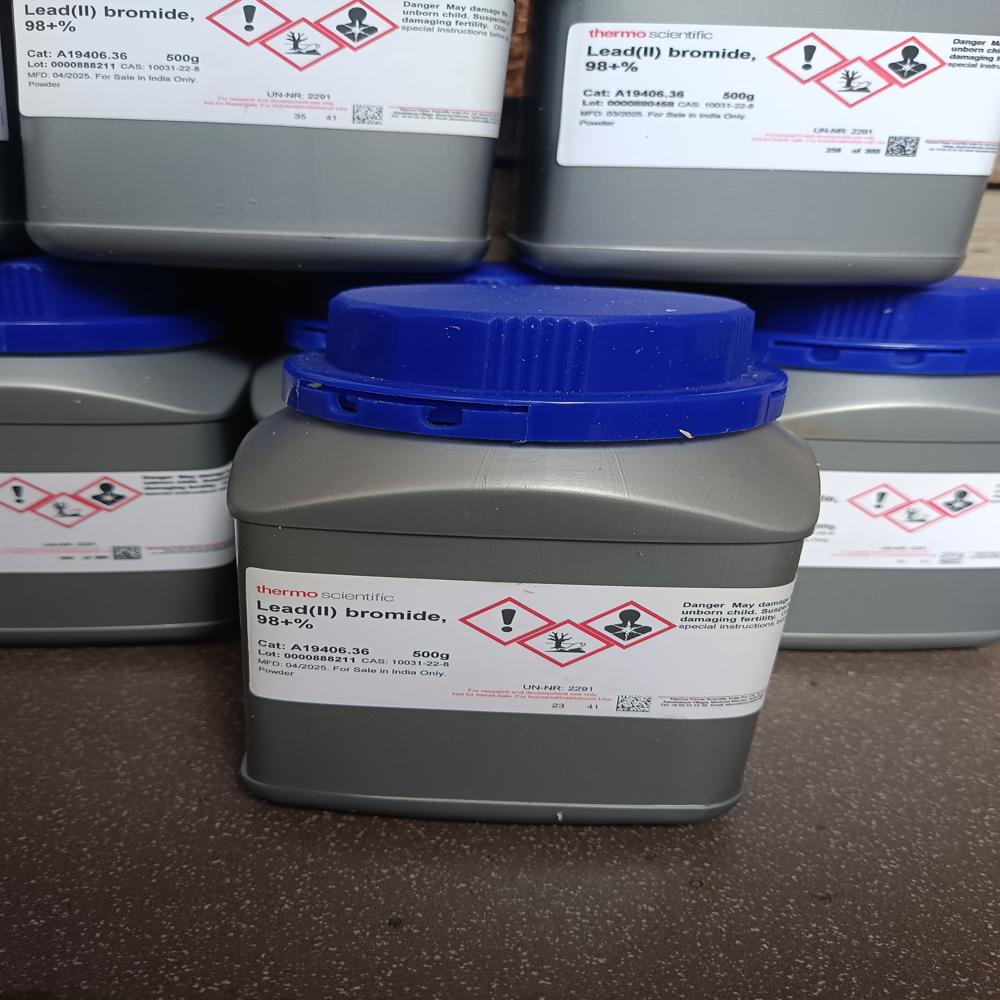
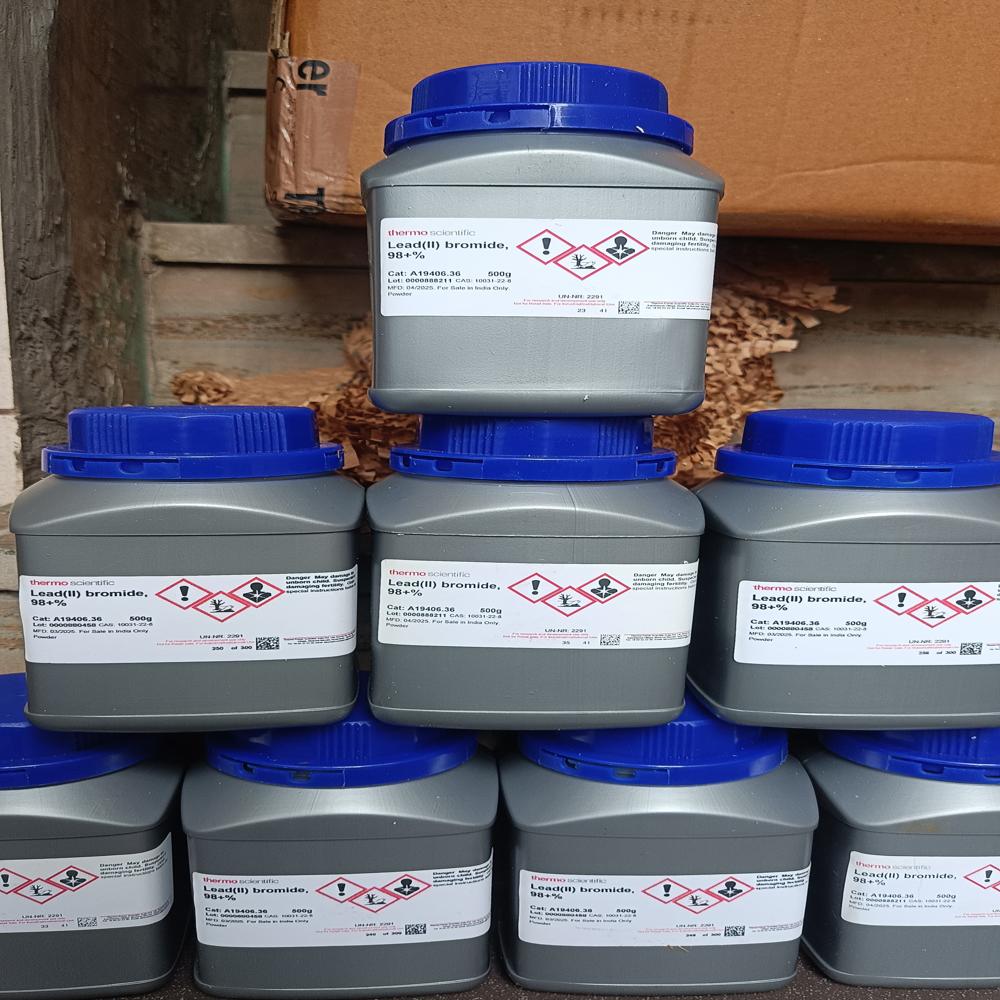
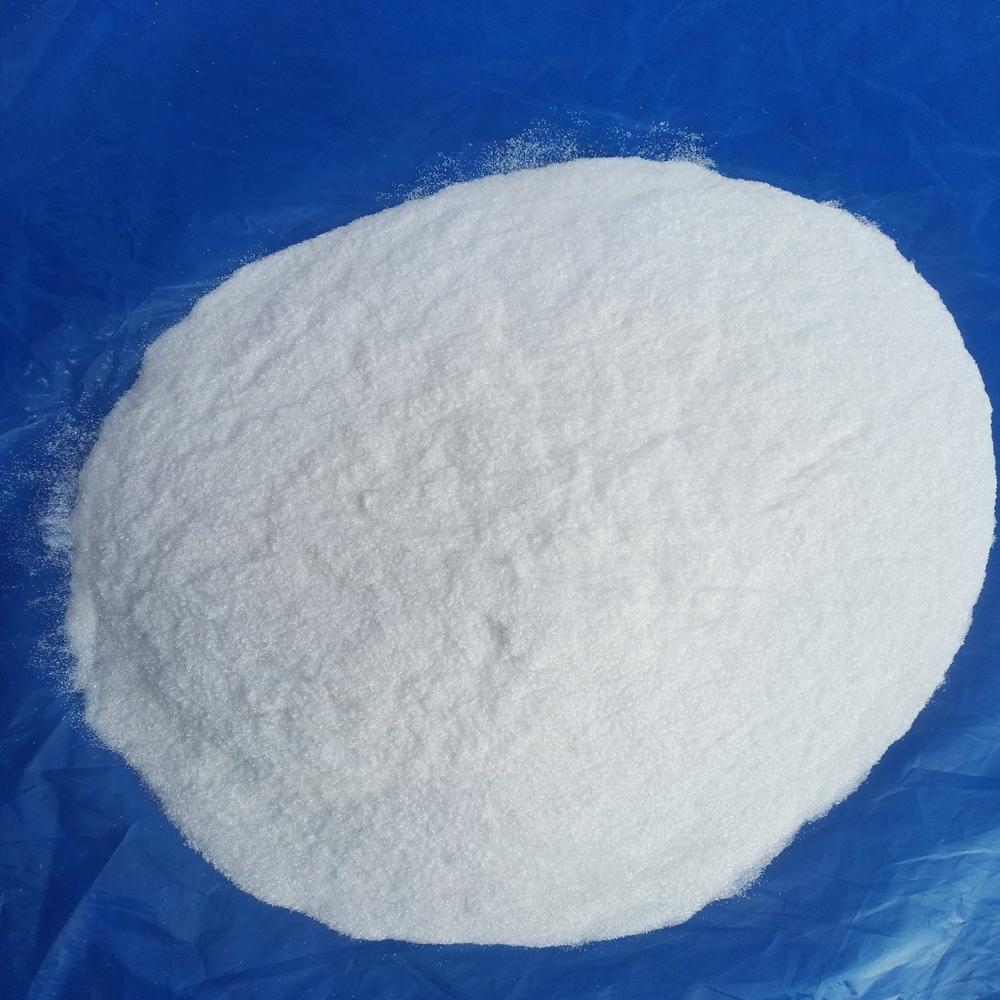
Lead(II) bromide ((text{PbBr}_{2})
) is a white, crystalline inorganic compound with a density of (6.66text{ g/cm}3)
and a melting point of (373text{ C})
. It is sparingly soluble in water, though solubility increases significantly in hot water. Commonly used in synthesizing perovskite materials for LEDs and photovoltaics, it is also a well-known subject in studies of molten salt electrolysis. [
1,
2,
3,
4,
5]
Exceptional Purity for Advanced ApplicationsThis Lead (II) Bromide reagent offers 100% purity, making it suitable for highly sensitive chemical syntheses. Its consistent quality is essential for producing reliable results in research and industrial settings, particularly in the electronic materials sector.
Engineered for Innovative Electronic MaterialsUsed mainly in creating specialized perovskite materials, Lead (II) Bromide plays a critical role in the advancement of next-generation electronics. Its unique properties support the development of innovative devices and components.
FAQ's of Lead (ii) Bromide:
Q: How is Lead (II) Bromide typically used in chemical synthesis?
A: Lead (II) Bromide is primarily employed as a precursor in synthesizing specialized perovskite materials, which are vital components in the electronics industry due to their unique conductive properties.
Q: What benefits does reagent grade Lead (II) Bromide offer in research or industrial processes?
A: Its reagent grade assures 100% purity and high solubility, which allows for precise and consistent results in sensitive chemical syntheses and material production, reducing contaminants that could impact experiment outcomes.
Q: When should Lead (II) Bromide be selected for material synthesis?
A: It should be chosen when high purity and reliable quality are crucial, particularly in projects involving perovskite materials or electronics where impurities can influence performance and properties.
Q: Where is Lead (II) Bromide primarily applied in the field of electronics?
A: This compound is mainly used in the development and fabrication of perovskite-based electronic devices, including advanced semiconductors, photovoltaic cells, and other optoelectronic components.
Q: What process is recommended for handling and dissolving Lead (II) Bromide powder?
A: Due to its solubility, it can be carefully dissolved in suitable solvents under controlled laboratory conditions, following appropriate safety protocols and using standard procedures for reagent grade chemicals.
Q: What are the main advantages of using Lead (II) Bromide in perovskite material production?
A: It enables the formation of high-quality, homogeneous perovskite crystals, which are essential for achieving desirable electrical and optical properties in cutting-edge electronics.





 Send Inquiry


 Send Inquiry
 Send Inquiry
 Send SMS